
How to Keep Your Business Running During a Renovation or Buildout
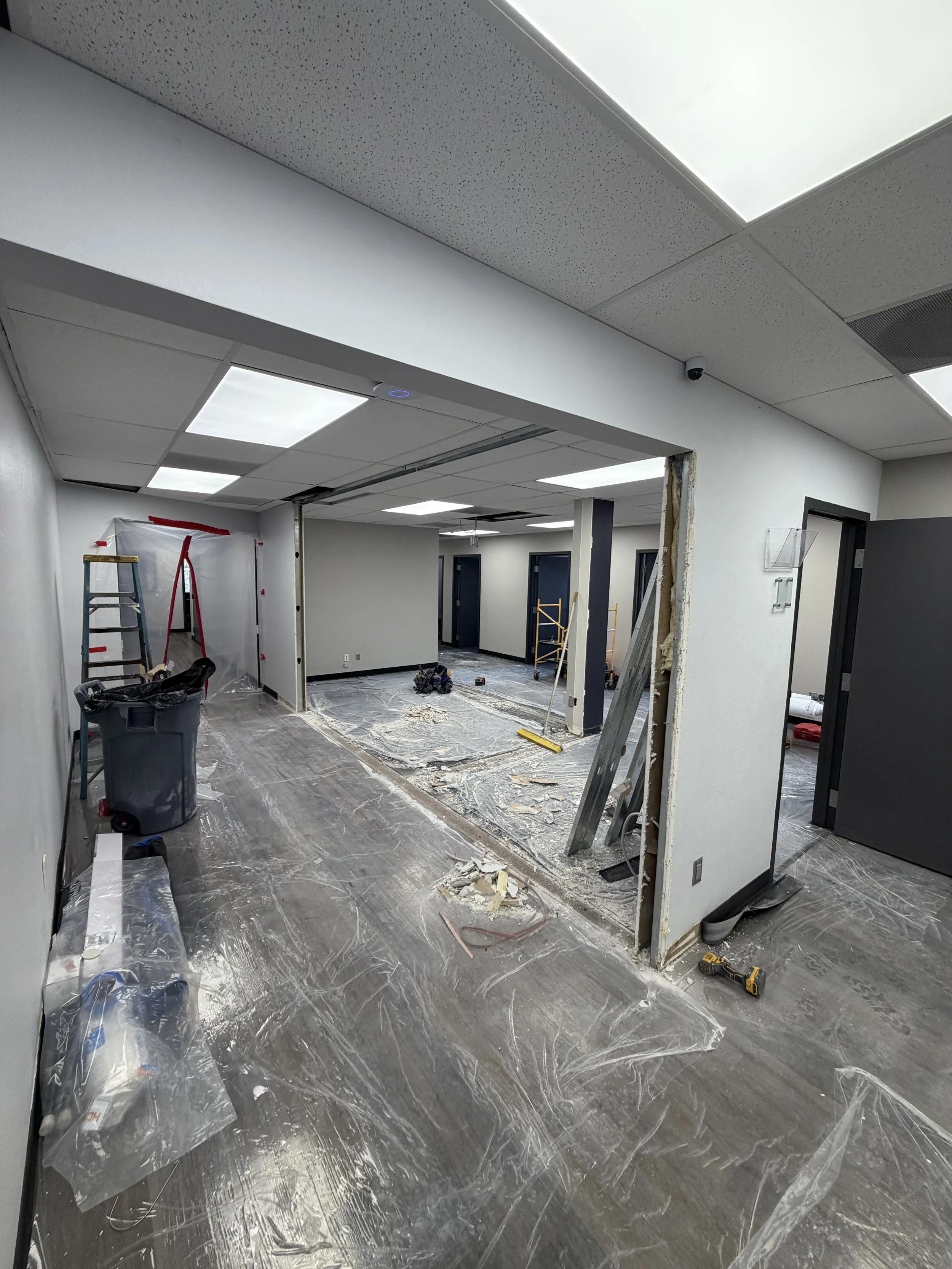
Working in construction zone
It’s important to communicate this to employees and be able to prepare them for how to safely get around the office while work is going on.
Construction and business operations do not always coexist easily. Noise, dust, limited access, and shifting workspaces can affect your team, your customers, and your day-to-day productivity.
But with the right planning, most businesses can keep running through a renovation or buildout without major disruption. Here is how to approach it.
Start with an honest conversation about phasing
Phasing is the practice of dividing construction into stages so that part of your space remains operational while work happens in another area. It takes more planning and often adds some cost, but for businesses that cannot close, it is frequently the right call.
Work with your contractor to map out which areas need to be offline and when. The goal is to sequence work in a way that protects your most critical functions and minimizes overlap between active construction and active business.
Communicate early with your team
Your employees will be affected by construction, whether it is noise during a call, reduced parking, rerouted foot traffic, or temporary changes to their workspace. The more notice you give them, the better they can plan.
Let your team know:
• What work is happening and why
• Which areas will be affected and when
• What temporary arrangements are in place
• Who to contact if they have concerns
Construction that feels unexpected or poorly communicated creates frustration. Construction that people have been prepared for is easier to absorb.
Think about your customers
If your business serves walk-in customers or clients, construction affects their experience. Be proactive about managing that.
Consider:
• Signage that directs people clearly and acknowledges the construction
• A brief message on your website or social media explaining what is happening and when it will be done
• Temporary entrances or adjusted hours during the most disruptive phases
Most customers are more understanding than business owners expect, especially when they feel informed. Framing the work as an investment in a better experience for them goes a long way.
Protect what matters most
Every business has functions that cannot be interrupted. Identify yours before construction starts and build your phasing plan around protecting them.
For some businesses, that is a server room or data infrastructure. For others, it is a production line or a patient-facing space. Whatever your critical function is, make sure your contractor understands it and that it is accounted for in the construction sequence and safety planning.
Set clear expectations with your contractor
A good commercial contractor knows that you are running a business alongside their project. Make sure your expectations are clearly documented from the start:
• Working hours and any restrictions on noise or access
• How dust and debris will be controlled and contained
• Protocols for deliveries and equipment movement
• Who on your team is the point of contact for day-to-day coordination
Regular check-ins between your operations lead and the project superintendent go a long way toward catching problems before they affect your business.
Plan for the unexpected
Even well-planned projects encounter surprises. A pipe discovered behind a wall, a permit revision, a material delay. Build some buffer into your expectations around timing, and make sure you have a plan for what your business will do if a phase runs longer than anticipated.
A contractor who communicates proactively when something changes, rather than waiting until it becomes a problem, is worth a lot during this kind of project.
Final thoughts
Running your business through a construction project is manageable when the planning is thorough and the communication is consistent.
If you are planning a commercial renovation or buildout in Colorado Springs and want to talk through how to structure the project around your operations, we are glad to help you think it through.