
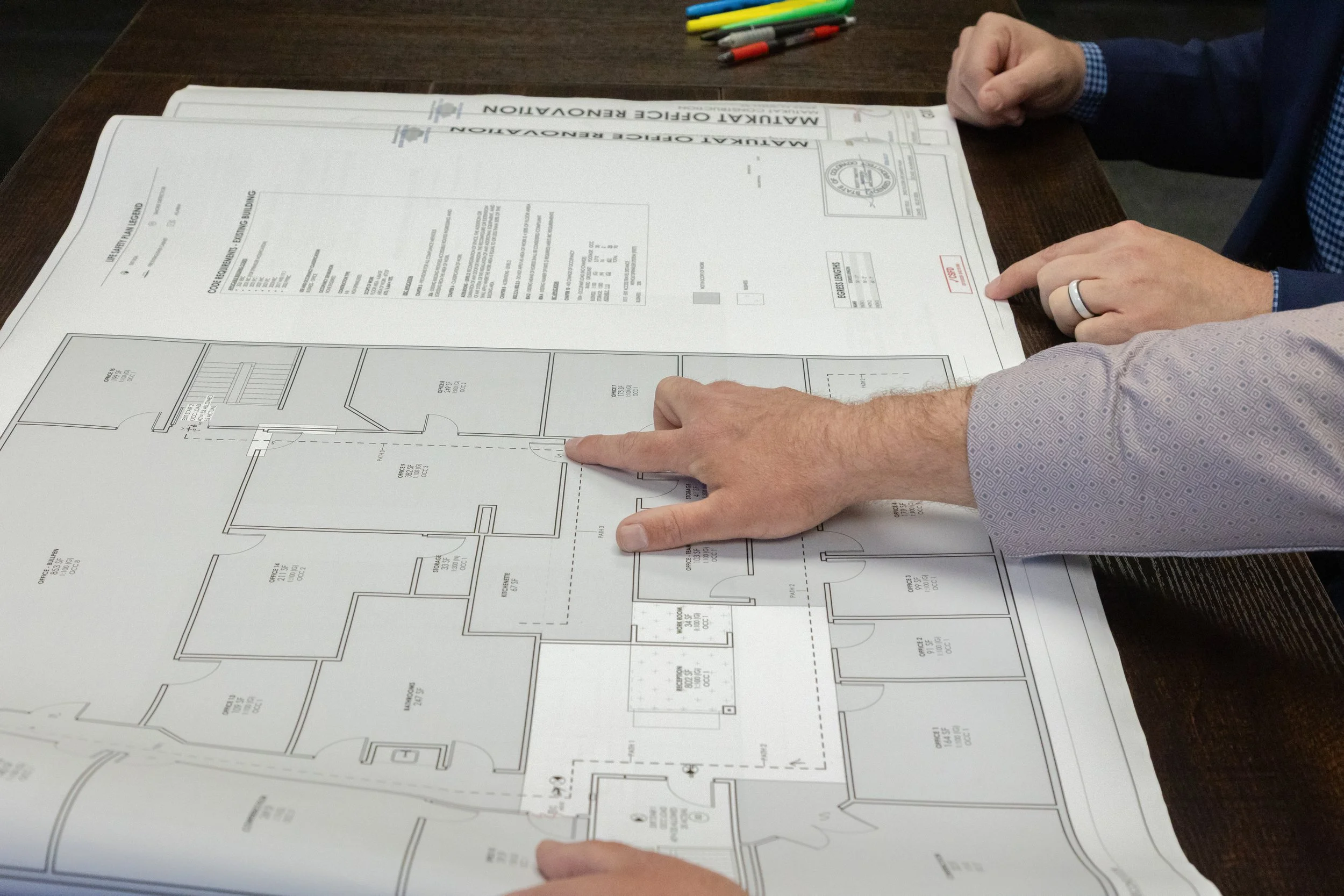
Design-build gets talked about a lot in the construction industry. It sounds straightforward: design and construction handled by one team. But what does that actually mean for the people going through it, and why does it matter?
Here is a plain-language breakdown of what design-build involves, how it differs from the traditional approach, and when it is the right fit.
The traditional approach: design, then bid, then build
In a traditional construction delivery model, you hire an architect first. They develop plans independently. Once those plans are complete, you bring them to contractors for competitive bids. The lowest (or preferred) bid wins, and construction begins.
This process has been used for decades and works for certain project types. But it has a structural problem: the people designing the building are not the same people who will build it. That disconnect can create budget surprises, constructability issues, and friction between your design team and your contractor.
How design-build works differently
In a design-build model, the design and construction functions are integrated under one team from the beginning. Your architect, designer, and contractor are working together, not sequentially.
That integration changes the dynamic in a few important ways.
Costs are informed by construction reality from the start. Your designer is not developing plans in a vacuum. They are working alongside someone who knows what things actually cost to build in Colorado Springs right now. That means fewer moments late in the process where a design has to be value-engineered because it came in over budget.
Problems get identified earlier. When design and construction expertise are in the same room, constructability issues surface during planning, not during framing. That saves time and money.
You have one point of accountability. In a traditional model, disputes between the architect and contractor often land in the client's lap to resolve. In a design-build model, that friction largely disappears because it is one team with shared responsibility for the outcome.
What design-build is not
Design-build does not mean you sacrifice design quality for construction efficiency. A good design-build team brings the same creativity and attention to detail as any standalone architecture firm, with the added benefit of knowing how to execute what they design.
It also does not mean you have less input. Design-build projects are still highly collaborative. You are involved in every major decision. The difference is that the decisions you make are grounded in real-world cost and feasibility from the beginning.
When design-build is the right fit
Design-build tends to work especially well when:
• Budget certainty matters. You want to know early if a design direction is going to work within your budget, not after the plans are complete.
• Schedule is a priority. Integrated teams move faster because there is no hand-off between design and construction phases.
• The project involves complexity. The more moving parts a project has, the more valuable it is to have design and construction thinking aligned from day one.
• You want simplicity. One contract, one team, one point of contact is easier to manage than coordinating multiple independent firms.
What to ask a design-build contractor
Not every firm that calls itself design-build operates the same way. When evaluating a design-build team, ask:
• Is design genuinely integrated into your process, or do you outsource it and coordinate separately?
• How do you handle situations where design intent and budget are in conflict?
• Can I see examples of projects where the design-build approach made a tangible difference?
The answers will tell you whether you are looking at a truly integrated team or just a rebranded traditional model.
Final thoughts
Design-build is not the right delivery method for every project. But for clients who want budget clarity, faster timelines, and a single point of accountability, it is often the best option available.
If you are weighing how to structure your next project and want to understand whether design-build makes sense for your situation, we are glad to walk through it with you.